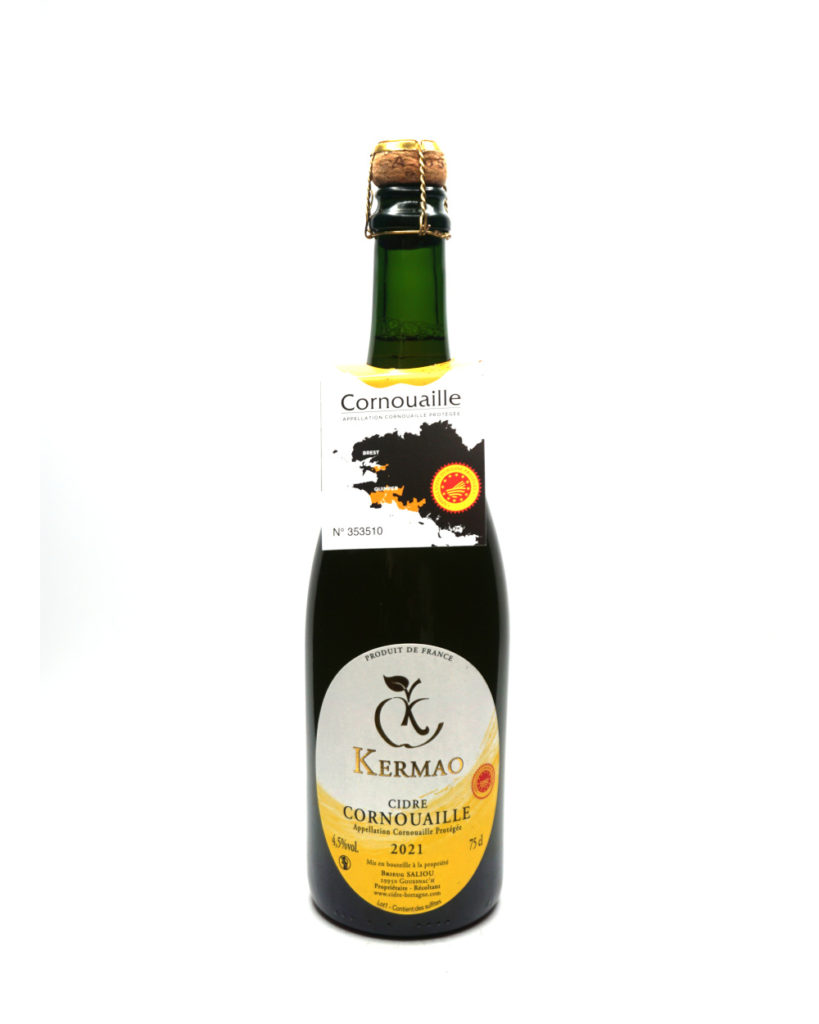
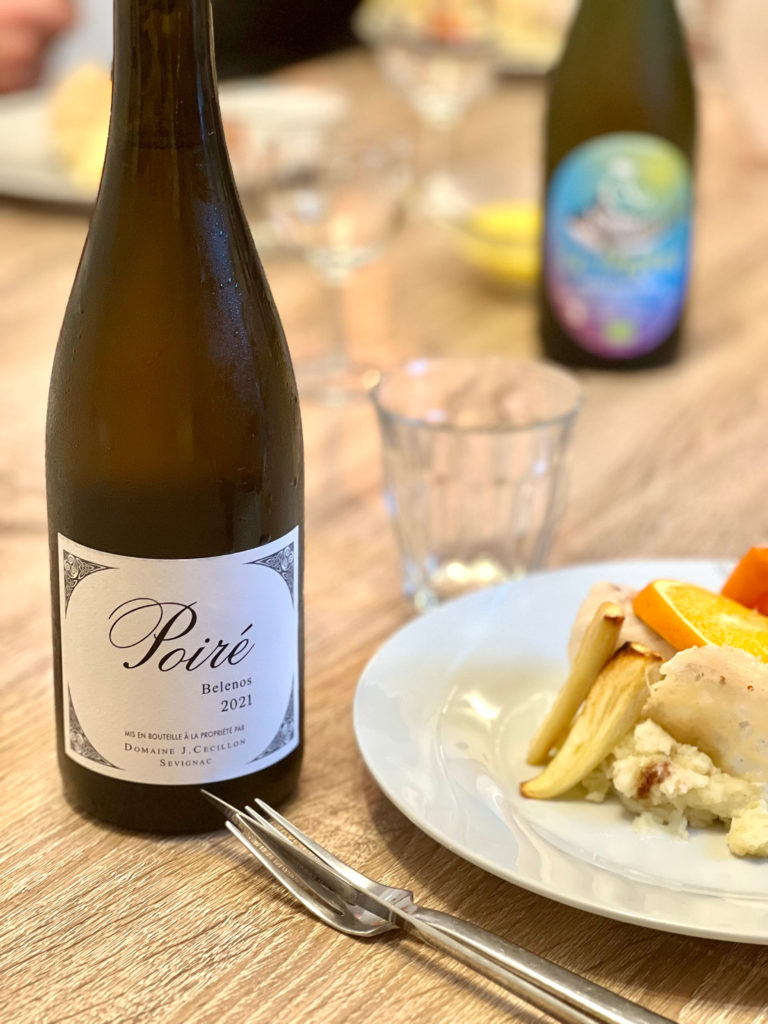
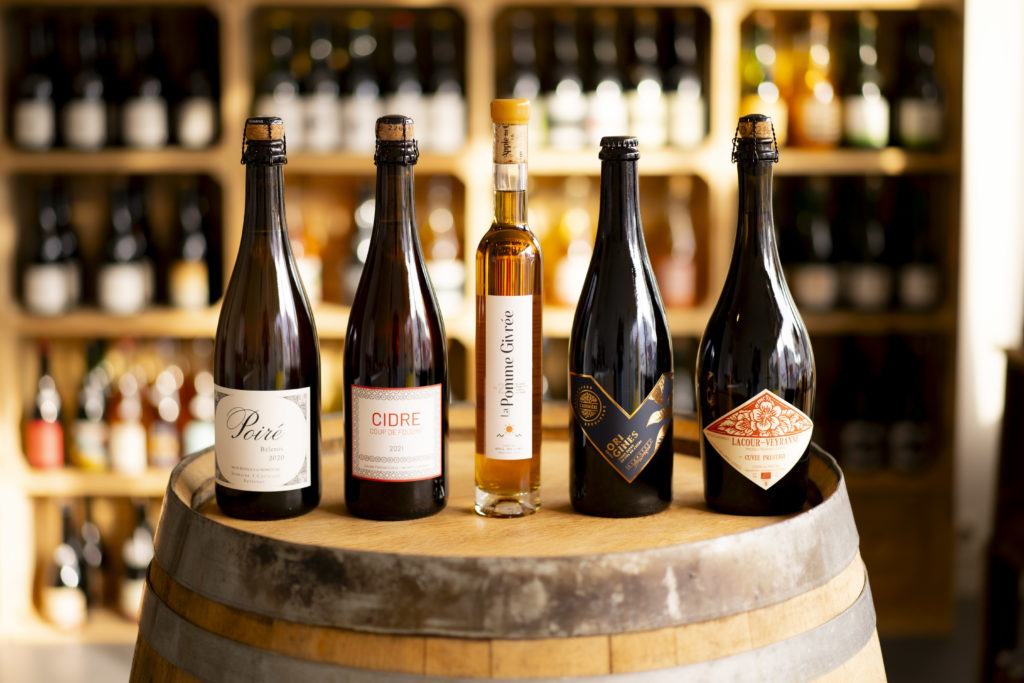
A millennia-old beverage, almost everyone knows that cider is made from apples.
But do you know in detail the steps involved in making a good cider? Here are its secrets:

A millennia-old beverage, almost everyone knows that cider is made from apples.
But do you know in detail the steps involved in making a good cider? Here are its secrets:
Several clearly defined steps are required before you can enjoy your bottled cider. Eachhas its own vocabulary, and every producers may adapt them according to their expertise.
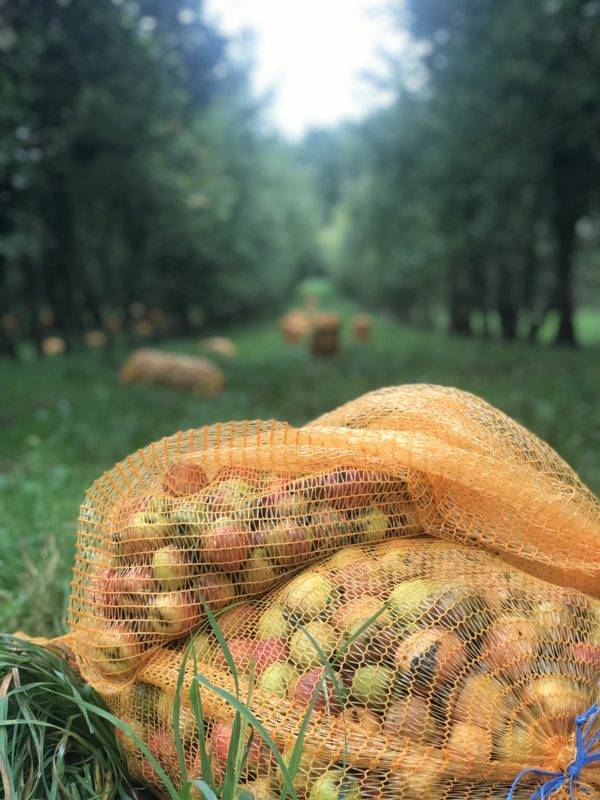
From September to December, the time for seasonal picking begins. Depending on the year’s climate, the harvest may start earlier or later and end sooner or later. What truly matters is ripeness, and only long experience and perfect knowledge of the fruit allow the producer to come close to perfection. Apples that have fallen onto the grass (to avoid any contact with the soil) are collected either manually or mechanically and transported under cover. They are then either pressed immediately or stored for a few days to several weeks in order to reach their full aromatic potential.
Some producers create their blend by combining different apple varieties before brewing. Once carefully washed and sorted by hand, the healthy apples are coarsely crushed.
The producer then lets the mash macerate for an hour or more before pressing it, it is called the barrel fermentation.
This form of skin maceration aims to intensify the color of the ciders through oxidation, enhance their aromatic complexity, extract more substances, and increase the rate of pectin in it.
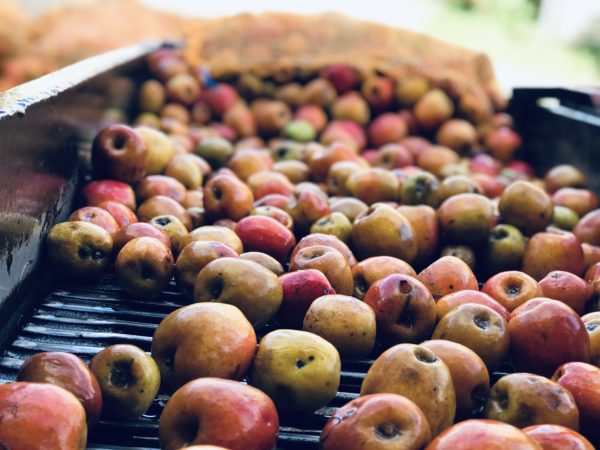
Rack-and-cloth press, pneumatic, screw press… to each its press. The goal being to extract a maximum of cider apples juice.
According to the quality of the apples, the equipment and methods used, the juice extraction yield is between 60% and 80%. The must obtained is then transferred in a vat for its natural clarification or settling.
Once the crust is formed at the surface, it is important not to waste time before transferring the clarified must into a new tank or barrel, in order to prevent the cap from collapsing under the first bubbles of fermentation. By a pump action, the clear must is decantated in a new container away from the oxygen. It is also advised to effect these racking under high atmospheric pressure to facilitate extraction.
Alcoholic fermentation is now accelerating under the actions of yeast. These last ones, by consuming the sugar in the must, will naturally create alcohol, carbon dioxide and an aromatic bouquet. Still at a low temperature, the producer must also control the pace of fermentation through multiple rackings or by filtration in order to slow down the fermentation process as much as possible and ensure a high-quality cider.
Depending on the duration of fermentation (3 to 6 months), the producer will obtain different cider profiles: sweet, semi-dry, dry, or extra dry. Much like a winemaker, the producer can then choose to blend certain tanks together to achieve a perfect balance or a specific cider profile.
Once the rate of sugar wanted reached (measure by a densimeter), the cider will be filtrated and bottled for its secondary fermentation, where 2 main methods exist:
Traditional and champagn methods
The producer can opt for natural carbonation by performing a second fermentation in the bottle, similar to fruit “pét-nats”. He leaves a precise residual sugar level in the must so that the remaining active yeasts (or selected yeasts) can feed on it, producing fine bubbles directly in the bottle. The sediment formed by the spent yeast (lees) can then be disgorged. A top-up is then performed using the same cider.
An increasing number of ciders and perries are also being crafted using the champagn method. Once bottled, the cider is stored on riddling racks and then on racks for several months before being released to the market.
Gasification
The producer chose to add CO2 or not in its pasteurized must in order to control its effervescence. The majority of carbonated ciders are pasteurized. These are, in fact, the ones found in bulk on supermarket shelves…
Today, ciders are embracing a bold new identity, ranging from cellared ciders to hopped, barrel-aged, flavored, vintage, and co-fermented varieties… all signs of a trend that checks all the boxes for the sustainable, local, and natural consumption that consumers seek today.
The 7,500 apple varieties known worldwide are said to share a single common ancestor: the Malus sieversii apple, native to the Tian Shan forest in Kazakhstan. The majority of known apples are so-called “dessert apples” (or table apples) that can be eaten fresh. However, certain varieties known as “cider apples” possess specific sought-after characteristics: tannins, sugar, acidity, and bitterness.
They are classified into five categories: sour, sharp, bitter, sweet, and bittersweet. They are also defined by their ripening period. Some are early-season varieties, falling from late August to early September. Others are mid-season and drop between October and November (the peak harvest period). Finally, there are late-season apples that, depending on the year, can be harvested as late as January.
One must not overlook the importance of water, particularly in the orchard, as well as that of wild or cultured yeasts, which shape the cider’s profile.
The equipment to make cider, a minimum amount of equipment is required. Here is a list of the necessary gear:
Want to learn more about cider, its history, and its origins? Check out our article on the topic.